


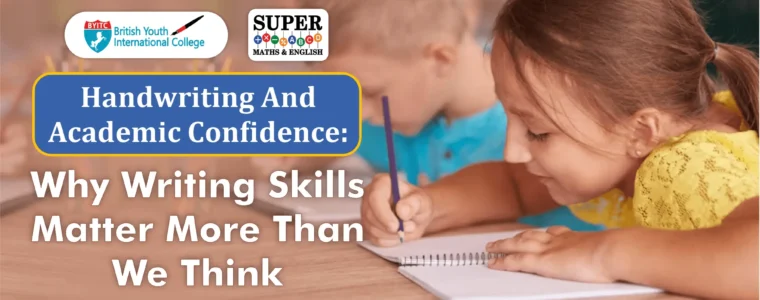
Handwriting and academic confidence play a crucial role in a child’s learning journey, especially during the early years of education. While handwriting is often seen as a simple classroom skill, it quietly shapes how confident children feel about learning, sharing ideas, and performing academically. The way a child writes can strongly influence how they see themselves as learners.
The Connection Between Handwriting and Confidence
When children struggle with writing, they often feel stressed during exams, homework, and classroom activities. Poor letter formation, slow writing speed, or unclear spacing can make even well-prepared answers look incomplete. This can lead to lower marks and self-doubt. Over time, repeated negative experiences weaken handwriting and academic confidence, making children hesitant to participate or take initiative.
In contrast, children with strong handwriting skills can write fluently and comfortably. This allows them to focus on ideas rather than the act of writing itself, helping them feel more capable and self-assured.

How Handwriting Skills Influence Academic Performance
Good handwriting skills support learning across all subjects. In maths, clear number formation and organised steps improve accuracy. In language subjects, legible writing helps children structure their answers more effectively and communicate their thoughts clearly. Teachers are also more likely to give positive feedback to neat, readable work, which further strengthens handwriting skills.
Additionally, when writing becomes automatic, children save mental energy. This cognitive ease improves memory, comprehension, and problem-solving abilities, key factors for academic success.
Emotional Impact in the Classroom
Classrooms are social spaces, and children naturally compare their work with peers. A child who feels proud of their handwriting is more comfortable sharing notebooks or reading answers aloud. On the other hand, weak handwriting skills can lead to embarrassment, anxiety, or avoidance of written tasks. These emotions directly affect handwriting and academic confidence and can shape a child’s attitude toward learning in the long run.
How BYITC Supports Strong Foundations
At BYITC, we believe confidence begins with strong foundations. Through programs like Abacus Maths, we focus on improving concentration, coordination, and fine motor control, skills that indirectly strengthen handwriting skills and build academic confidence in children.
Conclusion
Handwriting and academic confidence grow together. By helping children develop strong skills early, we give them the confidence to express ideas clearly, perform better academically, and enjoy learning. Handwriting isn’t just about neat pages; it’s about helping children believe in themselves and their abilities.
Related Blogs
How English Learning Classes for Kids Help Build Strong Communication Skills
Why Listening is Important: Improve Your English Skills Through Audiobooks
English Olympiad: Boosting Excellence Beyond the Classroom
Technology’s Impact on English Learning: From Language Apps to AI Tutors
What are the Top 5 Interesting Facts About Learning English Grammar?
Handwriting Courses in Jacksonville | Creative Writing Courses in Charleston | Creative Writing Courses in Indianapolis | Creative Writing Courses in Cheshire | Creative Writing Courses in Tulsa | Creative Writing Courses in Cumbria | Handwriting Courses in Jacksonville | Creative Writing Cours Near Me in Oxfordshire | Creative Writing Courses Near Me | Creative Writing Courses in Cambridgeshire