


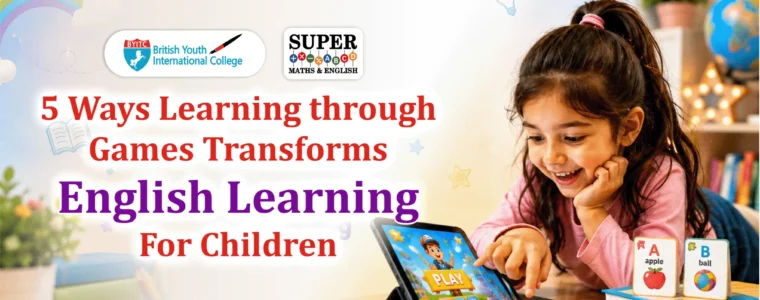
Learning through games is an effective way to help children fall in love with English. After all, who doesn’t love some fun?! Rather than sitting through dull grammar drills, children enjoy engaging English activities that turn new words and sentences into something they actually want to try. In fact, this shift has quietly changed how classrooms feel, and how children respond when a new lesson begins. Here are five ways this playful approach makes a real difference.
Learning English Through Games for Children
1. Games Make New Words Stick
When a child memorises a word from a list, it often disappears from their mind within a day. But when the child sees the same word in a game, says it, laughs about it, and uses it again a few minutes later, they remember it. This repetition, wrapped in fun rather than pressure, is exactly why this playful method works so well for building vocabulary.
2. Shy Children Find Their Voice
Many children go quiet the moment they are asked to speak English in front of others. They fear mistakes. A round of charades or a story-building game removes the spotlight from any one child and puts it on the activity itself. Nobody feels judged when they are busy having fun. Over time, this builds real confidence, and children who once refused to speak up begin joining in without being asked twice.

3. Engaging English Activities Sharpen Listening Skills
Focused listening is often the hardest skill to teach. Engaging English activities such as “Simon Says”, audio scavenger hunts, or listen-and-draw games ask children to pay close attention to instructions given in English. Because the game only works if they listen properly, children naturally train their ears without realising it.
4. Learning through Games Encourages Teamwork
Most language games are designed to be played in pairs or small groups. Instead of speaking only to a teacher or parent, they now speak to their friends or classmates, cheer each other on, and kindly correct small mistakes. This kind of social setting gives children a reason to use English naturally, rather than because they were told to. A few favourites that work well in most groups include:
- Board games with simple English instructions and question cards
- Team quizzes based on stories or picture books
- Role-play games where children act out everyday situations, such as ordering food or asking for directions
5. It Keeps Children Motivated to Keep Learning
Motivation fades quickly when lessons are repetitive. Games solve this by adding an element of surprise and achievement. A point scored or a puzzle solved gives children an immediate sense of progress, and they come back wanting more. This steady motivation is one of the clearest benefits of Learning through Games as a long-term teaching method.
A Simple Shift with Lasting Results
Yet, none of this means textbooks and structured lessons should disappear. Grammar rules and spelling still need proper teaching. But wrapping lessons in engaging English activities gives children a reason to care about what they are learning, rather than simply memorising it to pass a test. Parents and teachers do not need expensive tools to start; even a simple word game played for fifteen minutes a day can make a noticeable difference within a few weeks. It turns English from a subject to be studied into a language to be used, played with, and gradually mastered, one game at a time.
Related Articles
English Creative writing for kids that Inspires Young Writers
How to Choose the Best English Learning Classes for Kids Near You
How Creative Writing Classes Can Boost Your Child’s Confidence?
Interactive Games to Teach English Grammar to Children
5 Ways Online English Workshops Fast-Track Your Path to Fluency
Learning English Through Games in London | Learning English Through Games in Birmingham | Learning English Through Games in Manchester | Learning English Through Games in Liverpool | Learning English Through Games in Leeds | Learning English Through Games in Bristol | Learning English Through Games in Sheffield | English Learning Centre for Kids in Bristol | Best English Classes for Children in Glasgow | English Coaching for Kids in Edinburgh | Primary English Tuition in Sheffield